
V-Ray alternative for architects: when Syntina fits, when it doesn't
V-Ray is Chaos's production path-tracing renderer, integrated into 3ds Max, SketchUp, Rhino, Revit, Cinema 4D, Maya, Blender and more, and the industry reference for physically accurate final stills. Syntina is a fast AI generator for the concept stage, not a substitute for V-Ray's accuracy. Read where each one belongs.
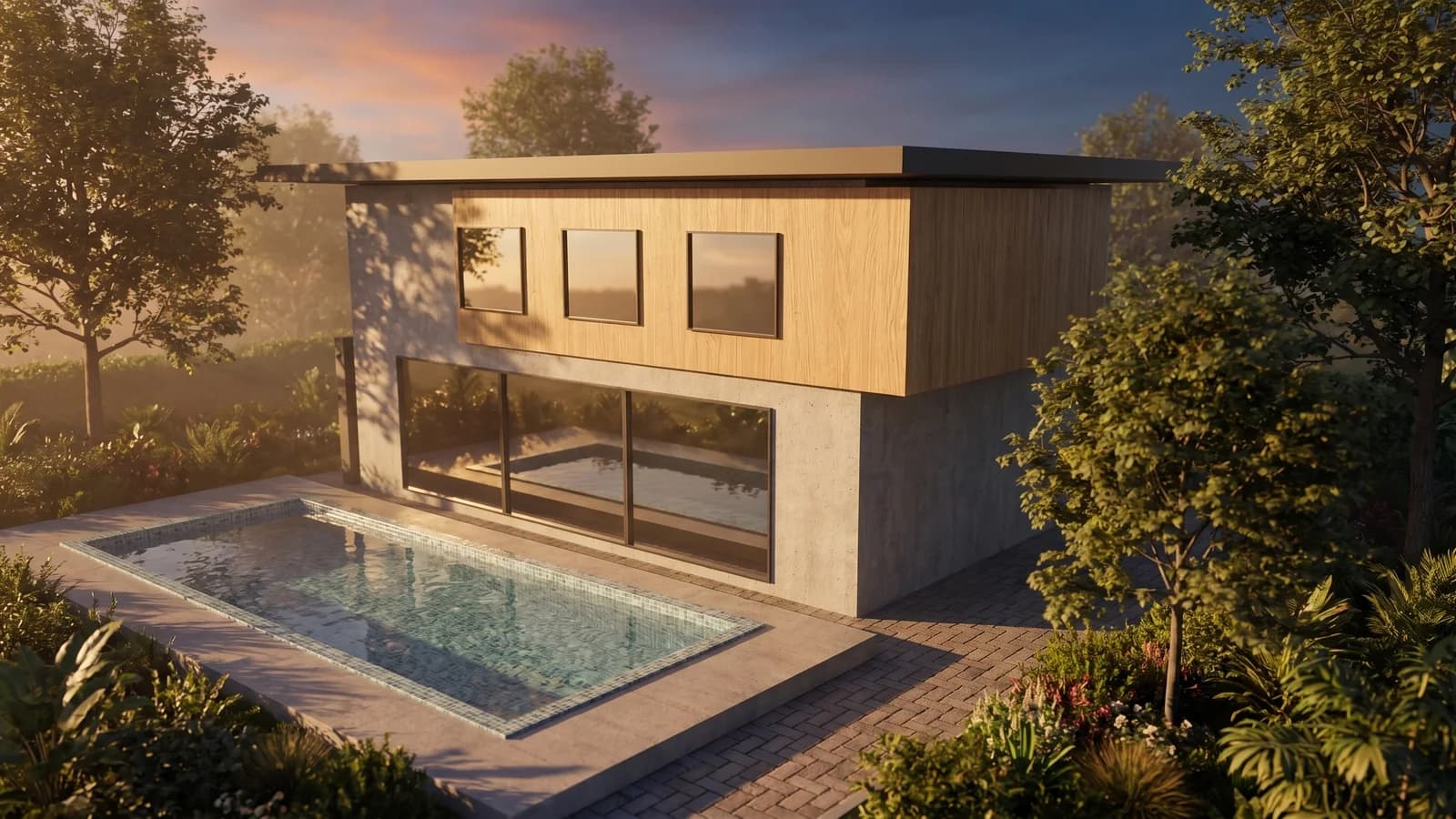 Syntina output — Blender, single attempt
 Model, panel and result on one screen
 Panel: account, scene, preset, credit estimate
Minutes, not hours
A Syntina generation takes about a minute, against V-Ray's minutes-to-hours path-traced render times.
Not physically accurate, and not trying to be
V-Ray stays the reference for physically accurate lighting and exact material specs; Syntina is an AI image generator built for speed, not simulation.
Starts from a sketch or photo, no scene setup
You don't need lights, materials, or a camera set up in a 3D scene — a sketch, photo, or plan is enough input.
Who It's For
V-Ray or Syntina? They're not competing for the same deliverable.
V-Ray, from Chaos, is a production path-tracing renderer with integrations for 3ds Max, SketchUp, Rhino, Revit, Cinema 4D, Maya, Blender and more. It simulates light physically, which is why it's the industry reference for final photoreal stills where material specs, lighting accuracy and client sign-off matter — think marketing renders, competition boards, and construction-documentation-adjacent visuals. That accuracy costs time: render times run from minutes to hours depending on the scene and hardware, and getting there takes a properly lit, textured 3D scene in the first place. If a final, physically accurate still is the deliverable, V-Ray is doing the job it was built for — we're not suggesting otherwise anywhere on this page.
Syntina isn't trying to replace that. It's an AI image generator built for speed at the concept stage: no lights or material setup, no render farm, no 3D scene required at all if all you have is a sketch or a photo. A generation takes about a minute, which makes it useful for narrowing down five material directions, or showing a client something believable before the team commits hours of V-Ray render time to one of them.
In short: use V-Ray when the deliverable needs to be physically accurate and final. Use Syntina earlier, when you need speed and volume — several directions, fast — before that final V-Ray pass, or when you're starting from a sketch or photo with no 3D scene behind it at all.
Example Outputs
Sample frames from this workflow.
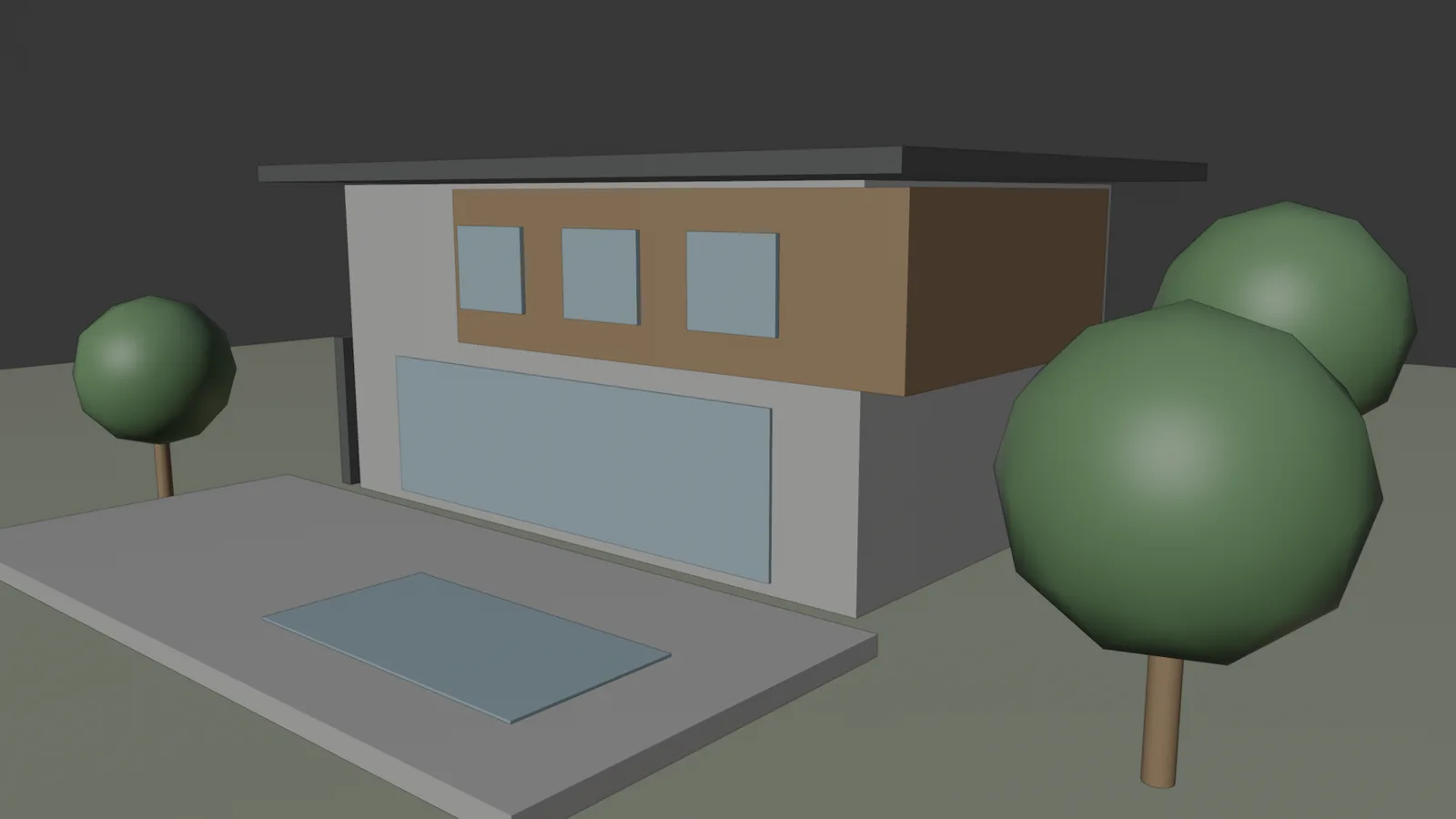
This is not a V-Ray render — it's Syntina's fast, concept-stage output. Left: the viewport as captured by the add-on (2048 px). Right: the View to Render preset, one attempt; brief: "warm late-afternoon light, light oak cladding, lush garden". Camera, massing and pool position are preserved.
Model, panel and result on one screenPanel: account, scene, preset, credit estimate Model settings and result
How It Works
From brief to output in three steps.
- 01
Upload your input
Upload a sketch, photo, plan, or a rough render/viewport capture from your browser — no scene, lights or materials to set up first.
Input: Sketch, photo, or 2D plan, An existing render or viewport capture, if you have one, Reference style images, A short project brief
- 02
Generate variations
Compare style, material and lighting directions on the same input before locking anything in for the final V-Ray pass.
- 03
Hand off the direction, not the file
Use the chosen frame as a client-approved direction; the final documentation-grade render stays a V-Ray job on the finished scene.
Output: Presentation-quality interior and exterior stills, 3D floor plan and concept images, A 3D model (GLB) generated from a single image
In Depth
V-Ray vs. Syntina, in four questions
Physically accurate simulation, or fast generation?
V-Ray path-traces light physically, matching real material specs and lighting setups closely enough to be trusted for final documentation-adjacent output.
Syntina generates an image with an AI model; it isn't a physics simulation, and it doesn't guarantee an exact material or lighting match to a spec sheet.
Render time and hardware
V-Ray render times run from minutes to hours, depending on scene complexity and hardware — a proper render usually needs a capable workstation or a render farm.
A Syntina generation takes about a minute in the browser, on any device, with no scene or hardware requirement.
What input each one needs
V-Ray needs a modeled, lit and textured 3D scene inside a supported host application before it can render anything.
Syntina can start from a sketch, a photo, or a 2D plan — useful before a 3D scene is even worth building.
Where each one belongs in the pipeline
V-Ray is the right tool for the final, client-facing, documentation-grade still — that's not something to shortcut with an AI generator.
Syntina is the right tool for the earlier decisions: which material, which light, which massing direction — fast enough to try several before the final V-Ray pass.
Prompt Patterns
Copy, paste, try it.
Pattern 1 — Narrowing directions before the final V-Ray pass
You want five fast material/lighting directions to show internally before committing render-farm time to one of them in V-Ray.
Using this exterior view, generate five lighting and material variations: (1) warm golden hour, light stone facade; (2) overcast daylight, dark brick facade; (3) blue hour with interior lights on; (4) midday sun, white render facade; (5) soft morning light, timber cladding. Keep the camera, massing and surroundings identical across all five.
A fast way to pick a direction before spending real render-farm hours in V-Ray on the final pass.
Pattern 2 — Concept pitch before a 3D scene exists
You have a hand sketch and need a believable client-facing image before a 3D scene is even worth modeling.
Convert this architectural sketch into a photorealistic exterior render, preserving its massing, proportions and design intent; don't reinterpret the design. Apply realistic materials, afternoon light, and a natural surrounding landscape.
This is earlier than V-Ray can help — there's no scene yet for it to render.
Pattern 3 — Lifting a rough viewport capture
You have an unlit viewport screenshot from your CAD scene and want a quick presentable still before setting up V-Ray materials and lighting.
Keep this 3D view's frame and composition exactly as is. Only lift the material and lighting: apply realistic wood and stone textures, warm directional daylight, soft shadows and natural reflections. Do not move any object or change the camera angle.
Useful for a same-day client update while the real V-Ray lighting/material setup is still in progress.
Comparison
V-Ray and Syntina AI, side by side
This table covers V-Ray's verified, publicly documented features; it does not include V-Ray's price list, since subscription terms change over time — check Chaos for current pricing.
| Criterion | V-Ray | Syntina AI |
|---|---|---|
| Working environment | Plugin/renderer for 3ds Max, SketchUp, Rhino, Revit, Cinema 4D, Maya, Blender and more | Web browser, no installation |
| Starting input | A modeled, lit and textured 3D scene | Sketch, photo, plan, or viewport capture |
| Hardware requirement | A capable workstation or render farm for realistic render times | None — rendering happens in the cloud |
| Rendering approach | Physically based path tracing, simulating real light and materials | Cloud-based AI image generation, one frame per generation |
| Time to first image | Minutes to hours, depending on scene and hardware | About a minute from a single upload, no scene required |
| What it's best at | Physically accurate, final documentation-grade and marketing stills | Fast concept images and variations before the final render |
| What it can't do | Isn't fast enough for rapid, disposable concept iteration | Doesn't guarantee physically accurate lighting or exact material specs |
| Pricing model | Paid subscription (check Chaos for current pricing) | Credit-based, from $19/month (Starter), Pro $45, Business $99 |
Scenarios
Where it's used in the field.
- Fast concept and pitch stills before committing to a full V-Ray render pass
- Comparing several material or lighting directions before the final render setup
- Teams without a render farm or a workstation dedicated to path tracing
Final Check
Is Syntina right for you?
- You need several directions fast, not one final render.
Generate five material or lighting options in the time one V-Ray pass would take to set up.
- You're starting from a sketch or photo, with no 3D scene yet.
Syntina works without a modeled, lit and textured scene.
- You don't need physically accurate, documentation-grade output for this image.
If exact material specs and lighting accuracy matter for sign-off, that stays V-Ray's job.
- You don't have render-farm time or a dedicated workstation free right now.
Syntina renders in the cloud in about a minute, regardless of your hardware.
- You want a flexible, credit-based cost instead of a subscription seat.
Plans start at $19/month; use only the credits you spend.
FAQ
Frequently asked questions
- Should I choose V-Ray or Syntina?
- If the deliverable is a final, physically accurate, client-sign-off-grade still, use V-Ray — that's the job it's built for. If you need several fast concept directions, or you're starting from a sketch or photo with no scene yet, Syntina is faster and cheaper for that stage.
- Can I use Syntina together with V-Ray?
- Yes, and this is the most common pattern: use Syntina to explore and narrow directions quickly, then build and light the approved direction properly for a final V-Ray render.
- Is Syntina a replacement for V-Ray?
- No. Syntina doesn't physically simulate light or guarantee exact material accuracy, which is what V-Ray is built for. For a final documentation-grade or marketing still, V-Ray remains the right tool.
- Why is Syntina so much faster than a V-Ray render?
- Syntina generates an image with an AI model rather than simulating light physically, so there's no scene setup, no lighting pass, and no render-farm queue — that trade-off is exactly why it isn't a substitute for V-Ray's accuracy.
- Can I upload a rough V-Ray render or viewport capture to Syntina?
- Yes. An unlit viewport screenshot or an early V-Ray test render both work as input images for a fast material or lighting pass.
- Can I try Syntina for free?
- Yes. You get free credits when you sign up and can move to a paid plan whenever you need more.
See which one fits your next deliverable
If the image needs to be final, physically accurate, and ready for client sign-off, use V-Ray. If you need several fast directions first, or you're starting from a sketch or photo, try Syntina.
Sign up with free credits and generate your first image in the browser in about a minute.